Doing more with sunlight
Resource
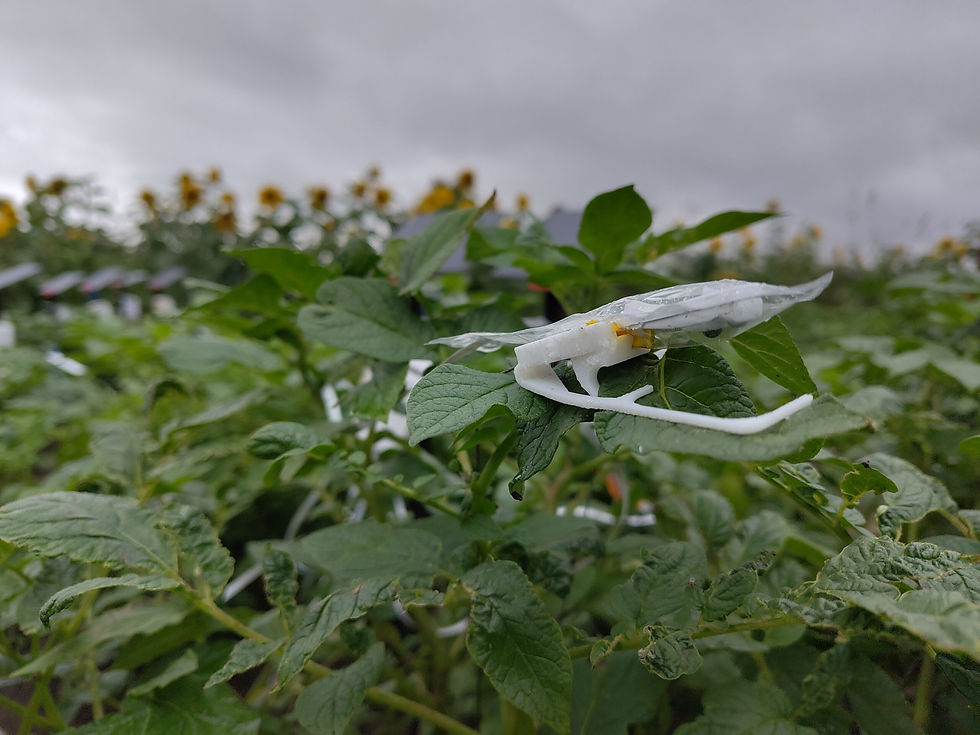
They look rather like clothes pegs, little white clips attached to the leaves of a potato plant. The field of potatoes behind Unifarm on the campus has hundreds of them. The pegs occasionally light up red, like fireflies. Is it a potato disco? No, it’s the new generation of photosynthesis measuring instruments.
This experiment carried out in the summer — the setup has since been dismantled — is about trying out the latest sensors for large-scale measurement of photosynthesis.
The mini-instruments were developed by researchers and tech experts at the Jan IngenHousz Institute and Michigan State University. The devices are the first tangible step — and perhaps the most important one — taken by the institute, which was founded two years ago.
The sensors are crucial in the approach that the institute is taking to improve photosynthesis in key food crops.
To improve the plant, start with its photosynthesis. That in a nutshell is the Jan IngenHousz Institute’s mission. The process of photosynthesis in plants, which converts water and carbon dioxide into sugar and oxygen under the influence of light, is the basis for all growth and development. Plants only use a small fraction of the incident light (about one per cent). That offers scope for improvement, in theory at any rate. More efficient photosynthesis is the holy grail for food-crop breeding organizations.
Read the full article in English or in Dutch